

Ivan Tochev

Ivan Tochev is the founder and CEO of General Laser GmbH in Vienna. He studied geophysics in Sofia and then engineering physics at the Vienna University of Technology. General Laser specializes in centimeter-accurate positioning using GNSS and LiDAR, as well as in mobile robotics: The company develops and manufactures RTK-GNSS receivers (GLRM, GLRP, GLR) and LiDAR scanners (GLidar), distributes robots from Unitree, AgileX, and BrainCo in Austria, and integrates them into its customers’ processes—from pilot projects to routine operations. Together with Lightberry, General Laser endows humanoid robots with personality and expertise. Ivan Tochev is also a co-founder of Manifold Tech GmbH—whose Odin 1 and Odin 1 Light sensors and Pocket 2 scanner provide today’s robots with vision and orientation—as well as of Dynamic Mold System. In his free time, he is passionate about building model airplanes and drones. He was a speaker at re.comm. in 2024.
Manon Westphal
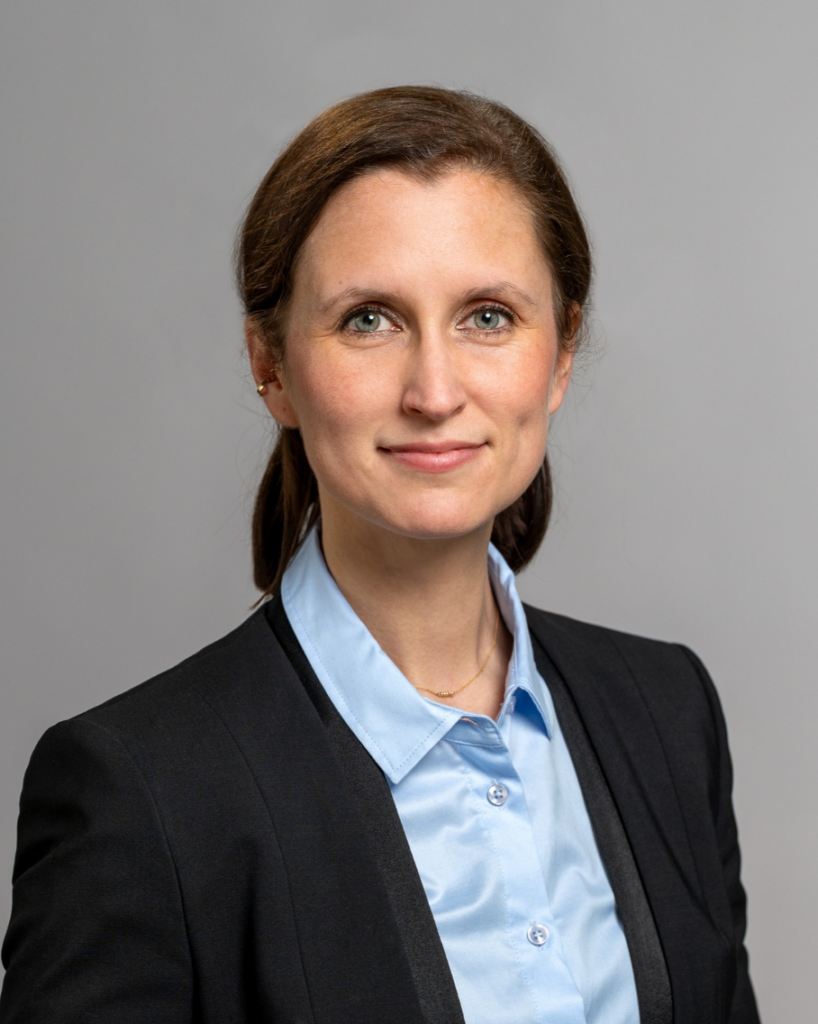
Manon Westphal is a professor of political theory and philosophy at the Munich School of Political Science and the TUM School of Social Sciences and Technology at the Technical University of Munich. Her research focuses on democratic theory and new forms of citizen participation in political processes. At the TUM Think Tank, she heads the Democratic Innovations Lab.
Othmar Karas
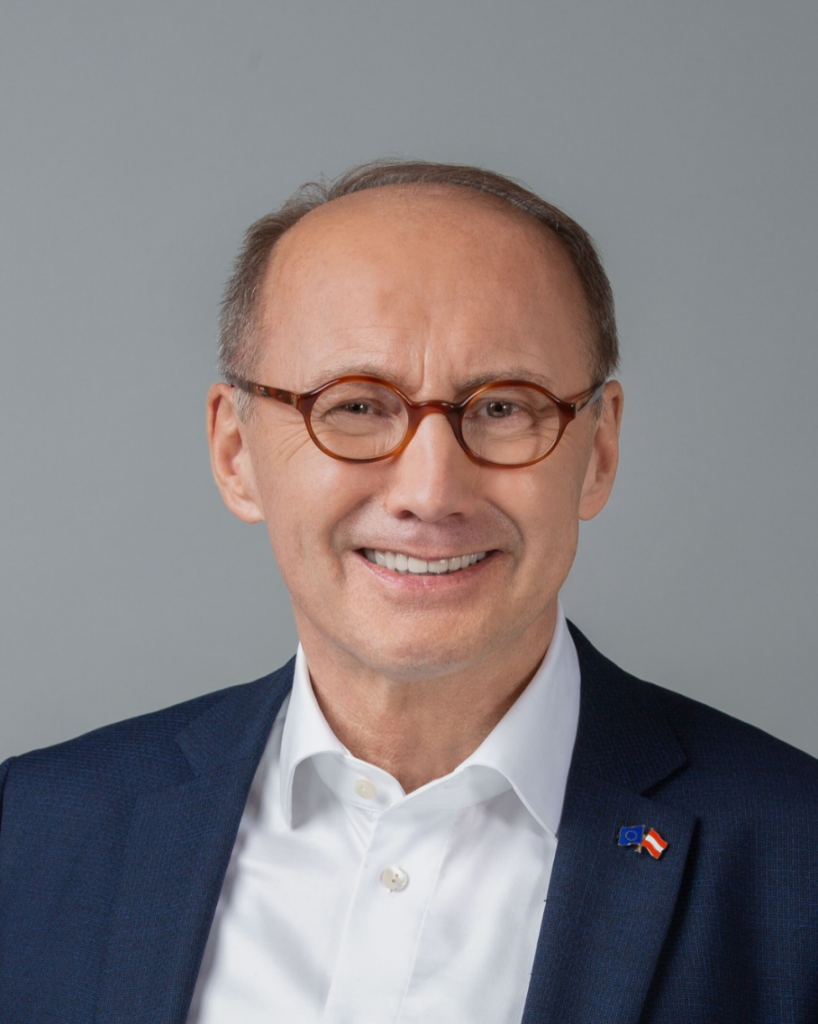
Dr. Othmar Karas is considered the former First Vice President of the European Parliament He remains one of the most renowned experts on European affairs. Since October 2024, Karas has also served as president of the European Forum Alpbach. He was born in 1957 in Ybbs an der Donau, the son of an elementary school principal and a district school inspector. From 1999 to 2024, Karas served as a Member of the European Parliament. This makes him the longest-serving Austrian MEP and the only Austrian to have been elected three times to the Bureau of the European Parliament. For 25 years, Karas served on the European Parliament’s Committee on Economic and Monetary Affairs. There, he played a leading role in shaping the financial market regulations that are in effect today. Karas served as chief negotiator for banking regulation following the 2008 financial crisis, EU investment programs, and the EU’s overall financial market supervision. In addition to his work in European politics, he has been president of Hilfswerk Österreich since 1998.
Nikolaus Widmann

For many years, Nikolaus Widmann has been active at the intersection of energy, infrastructure, and capital. When it comes to retrofitting existing properties to be climate-friendly and sustainably developing entire neighborhoods, he brings exactly the right expertise to the table. At the re.comm industry forum, he shares this knowledge with top decision-makers in the real estate industry. Widmann currently holds key positions: As a co-founder and managing partner of Global Sponsor SA, he directs investor funds toward key infrastructure projects. At the same time, as Executive Vice President at Tree Energy Solutions (TES), he oversees market development and strategic mergers and acquisitions (M&A) in Europe and the Middle East. He provides real-world examples to real estate industry leaders, demonstrating how strict ESG requirements for sustainability can be successfully combined with reliable returns despite volatile energy markets. Widmann has demonstrated his knack for sustainable business models over more than twelve years of operational experience. He previously served on the executive board of the Elevion Group (ČEZ Group), founded the company Inewa, and supported more than 30 young technology startups through Niasem Ventures. A graduate of Maastricht University, he was recognized for his achievements by Forbes, among others, and named to its prestigious “30 Under 30” list. Widmann’s key message: Energy infrastructure is no longer merely a burdensome cost factor, but rather a crucial value driver for sustainable real estate.
Eva Schütz
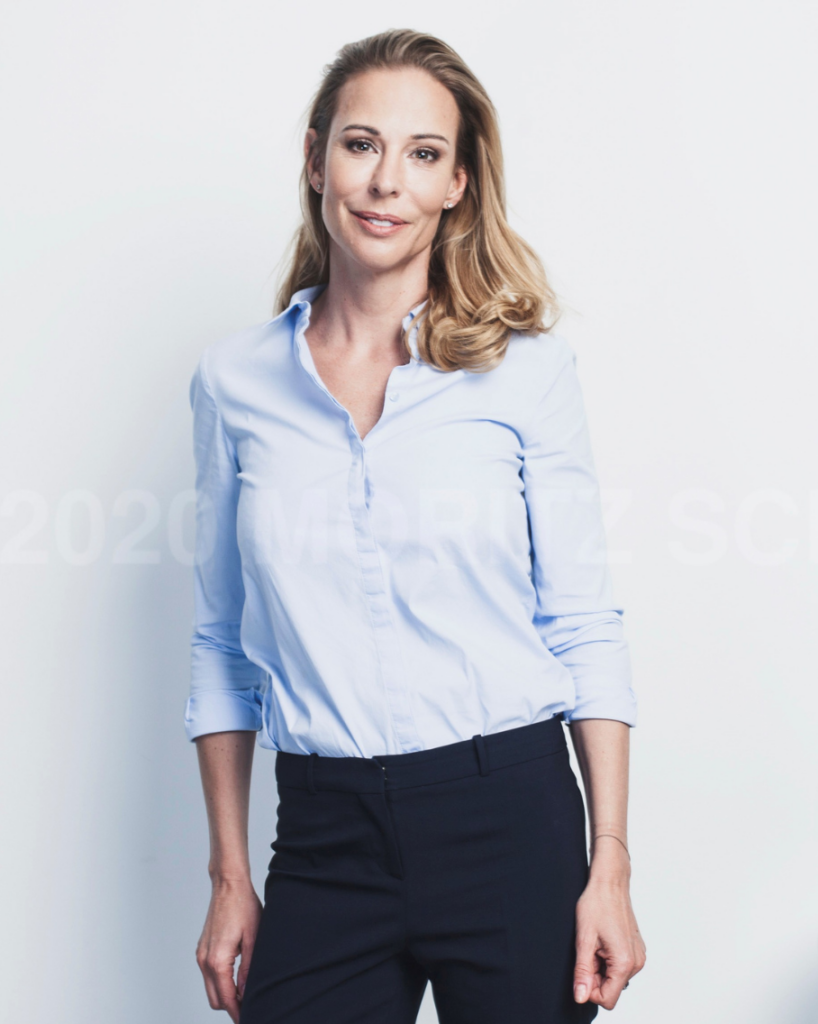
Eva Schütz is a member of the high-profile Investors Round Table 2026, held as part of re.comm26, where she contributes her extensive expertise in law, business, and media. A native of Vienna, she studied law in Vienna and Salzburg and finance in the U.S. after graduating from high school, before passing the bar exam with honors in 2006. After holding positions at renowned firms such as Arthur Andersen in New York and KPMG in Vienna, she successfully ran her own law firm for many years. Since 2017, she has also served on the supervisory boards of major companies such as Volksbank Wien AG and the ÖBB subsidiaries Rail Cargo Austria and ÖBB-Infrastruktur AG. She has also made her mark in politics: In 2019, she participated in coalition negotiations on justice issues and shortly thereafter assumed the role of deputy chief of staff at the Ministry of Finance. In 2021, she founded the online media outlet exxpress.at, served as its CEO until 2024, and continues to shape it today as editor-in-chief and publisher. Schütz demonstrated her perseverance beyond the worlds of business and media in 2012 when she was crowned Austrian national champion in long-distance running in the 3,000- and 10,000-meter events.
Johannes Berger
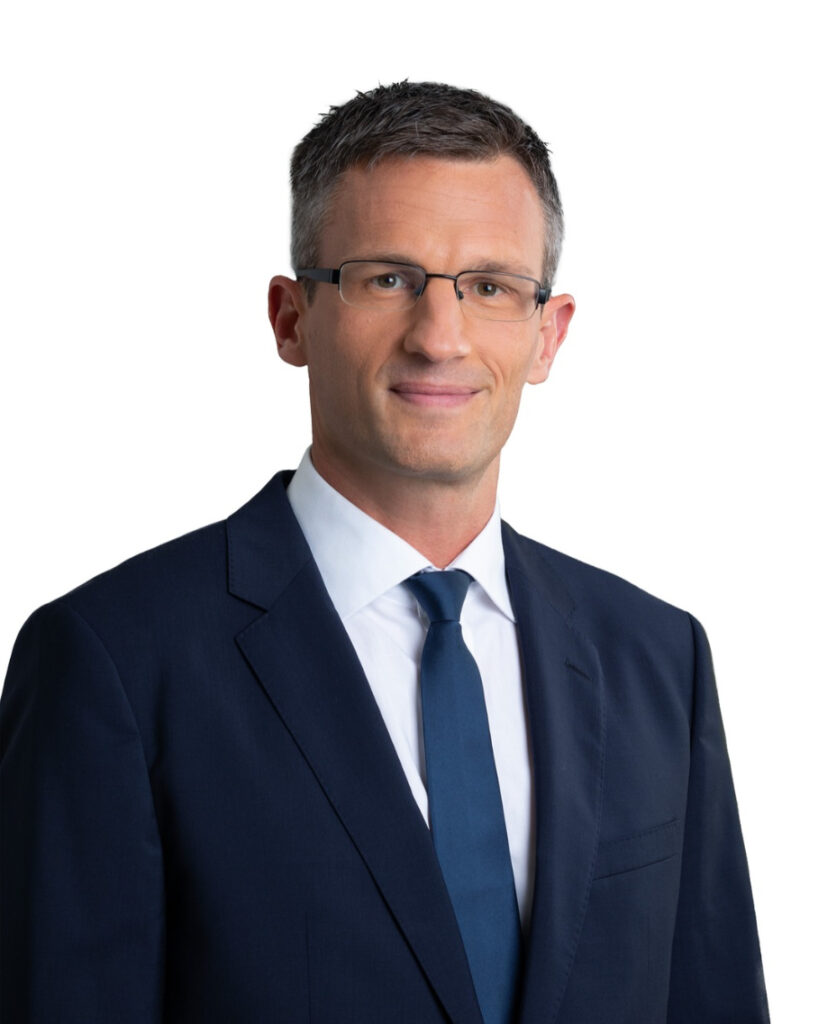
International financial markets are changing rapidly. This makes it all the more important today to have a precise understanding of macroeconomic relationships. Johannes Berger provides reliable data and a solid foundation for decision-making in this regard. He heads the “Labor Market and Social Security” division at the renowned economic research institute EcoAustria. His work focuses on taxes and social security contributions, the labor market, and the pension system. These factors also have a significant influence on how institutional investors allocate their funds and how stable real assets remain. His expertise is grounded in a degree in Applied Mathematics from the Vienna University of Technology, which he completed in 2004 with a focus on business mathematics. From 2005 through the end of 2011, Berger deepened his methodological expertise in applied research at the Institute for Advanced Studies (IHS). This mathematical perspective enables him to closely integrate theoretical models with practical data and to present complex economic processes in a way that is understandable to executives. His contributions to modern simulation models are particularly highly regarded. Together with Ludwig Strohner, Berger developed the dynamic equilibrium model “PuMA.” It is used in Austria and internationally to simulate the consequences of economic policy decisions. Previously, he had already set important standards for the European Commission with models such as “TaxLab” and the “EU-LLM” to reliably calculate the effects of tax and labor market reforms. On platforms such as re.comm, his analyses provide senior management with valuable guidance for accurately assessing long-term risks and opportunities in the market.
Martin Rhonheimer

Martin Rhonheimer is a philosopher, priest, and co-founder and president of the Austrian Institute of Economics and Social Philosophy in Vienna. From 1990 to 2020, he taught as a professor of ethics and political philosophy at the Pontifical University of Santa Croce in Rome, where he remains affiliated as a visiting professor to this day. His scholarly work focuses on issues in economic and social philosophy. He pays particular attention to the Austrian School of Economics, its political-philosophical and socio-ethical foundations, and its significance for Christian social teaching. Rhonheimer describes himself as a “Catholic liberal” and advocates for the political primacy of individual freedom and a market-based economic system. He is critical of what he sees as an overreaching welfare state. Rather, he views capitalism—when properly understood—as an essential approach to solving fundamental societal and social issues. As the author of numerous scholarly publications and books—some of which have been translated into several languages—Martin Rhonheimer has been exploring the relationship between freedom, the economy, ethics, and social responsibility for decades. His philosophical perspectives open the door to fundamental discussions about the economic and social order of our time.
Johannes Berger
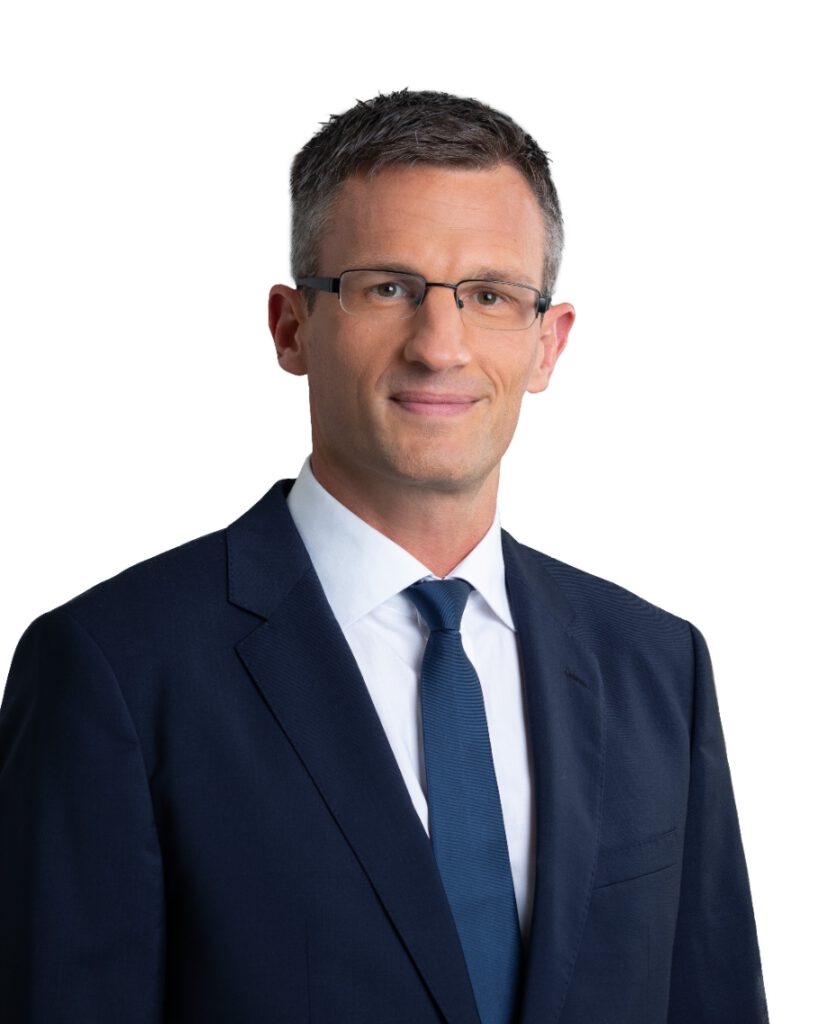
Our economy is undergoing profound change. This makes reliable data and sound analyses all the more important for strategic decisions made by top management. Johannes Berger, head of the Labor Market and Social Security Research Division at the renowned economic research institute EcoAustria, examines precisely this: He analyzes how fiscal policy, demographic change, and labor market trends are interlinked. His calculations provide the basis for forward-looking investment decisions—because economic conditions and structural shifts have a direct impact on the value of major asset classes. Berger studied applied mathematics at the Vienna University of Technology and conducted research for many years at the Institute for Advanced Studies. Building on this foundation, he developed groundbreaking tools for practical application. Together with Ludwig Strohner, he created the “PuMA” model, which precisely illustrates how economic policy decisions affect government finances and income distribution. Previously, he had already set international standards in the simulation of labor markets and tax systems with the “TaxLab” tool and the “EU-LLM” model, commissioned by the European Commission. At re.comm26, Berger’s models enable executives to look beyond short-term market cycles: An aging population, new career paths, and necessary reforms to social systems are fundamentally changing the landscape for future investments. Berger’s analyses provide management with reliable guidance for identifying structural risks early on and positioning real estate portfolios to withstand future challenges.
Johannes Berger
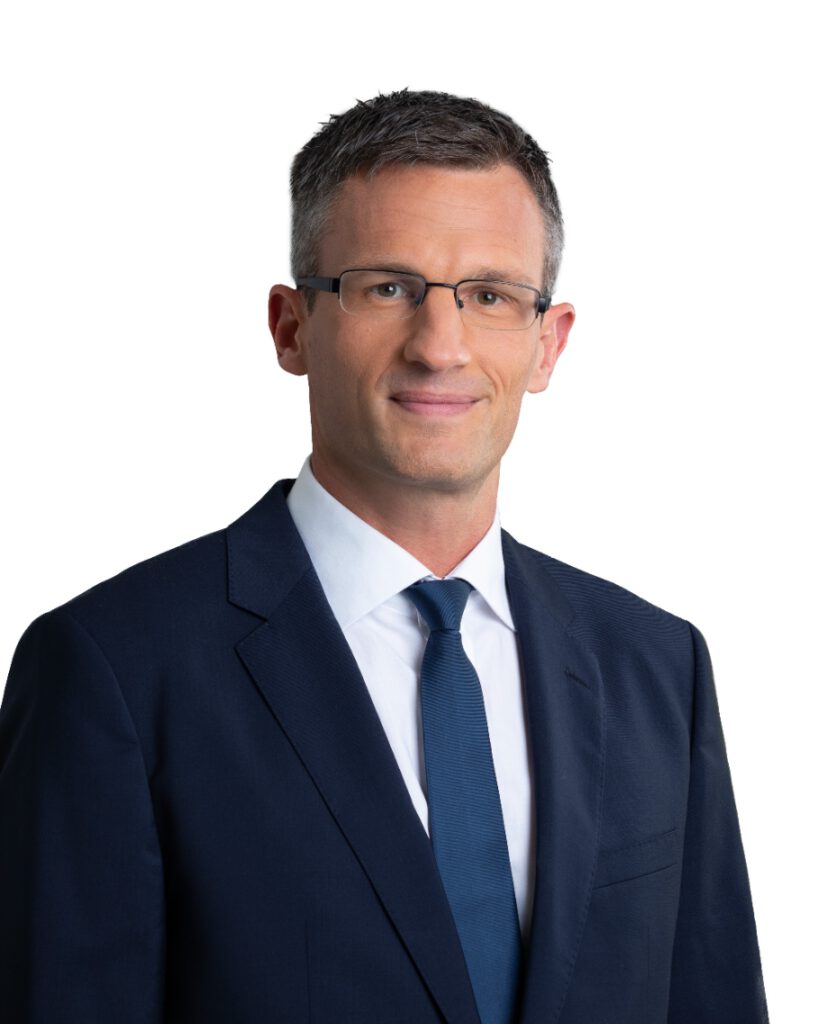
In a period of profound macroeconomic transformation, empirically grounded impact analyses are becoming increasingly urgent from a strategic perspective for top management. Johannes Berger, head of the Labor Market and Social Security Research Division at the renowned economic research institute EcoAustria, analyzes the systemic interconnections between fiscal policy, demographics, and labor market dynamics. His findings provide the quantitative basis for forward-looking investment decisions, in which macroeconomic framework data and structural shifts have a direct impact on the value of institutional asset classes. Scientific Foundation and Model Development With a solid academic foundation in economic mathematics from the Vienna University of Technology and many years of expertise at the Institute for Advanced Studies, Berger created pioneering tools for applied economic research. Together with Ludwig Strohner, he developed the dynamic equilibrium model PuMA, which accurately maps the fiscal and distributional effects of economic policy decisions. Previously, with TaxLab and the EU-LLM model commissioned by the European Commission, he set international standards in the simulation of labor market mechanisms and public tax systems. Strategic Relevance for Senior Management For executives engaged in re.comm’s strategic discourse, these complex models offer a glimpse beyond superficial market cycles. Demographic change, shifting employment trajectories, and the need to reform social security systems are redefining the macroenvironment for future capital allocation. Berger’s simulation-based analyses provide senior management with the necessary insights to anticipate volatile structural risks early on and position real estate portfolios for the future.
Johannes Berger

Company: Head of the Labor Market and Social Security Research Division at EcoAustria In a period of profound macroeconomic transformation, empirically grounded impact analyses are becoming increasingly urgent from a strategic perspective for top management. Johannes Berger, head of the Labor Market and Social Security Research Division at the renowned economic research institute EcoAustria, analyzes the systemic interconnections between fiscal policy, demographics, and labor market dynamics. His findings provide the quantitative basis for forward-looking investment decisions, in which macroeconomic framework data and structural shifts have a direct impact on the value of institutional asset classes. Scientific Basis and Model Development With a solid academic foundation in economic mathematics from the Vienna University of Technology and many years of expertise at the Institute for Advanced Studies, Berger developed pioneering tools for applied economic research. Together with Ludwig Strohner, he developed the dynamic equilibrium model PuMA, which accurately models the fiscal and distributional effects of economic policy decisions. Previously, through TaxLab and the EU-LLM model, commissioned by the European Commission, he set international standards in the simulation of labor market mechanisms and public tax systems. Strategic Relevance for Senior Management For executives engaged in re.comm’s strategic discourse, these complex models offer a glimpse beyond superficial market cycles. Demographic change, shifting employment patterns, and the need to reform social security systems are redefining the macroenvironment for future capital allocation. Berger’s simulation-based analyses provide top management with the necessary insights to anticipate volatile structural risks early on and position real estate portfolios for the future.
